Quick Answer: Every mahjong winning hand follows the same blueprint: 4 mentsu (sets) + 1 jantou (pair) = 14 tiles. A mentsu is either shuntsu (3 sequential tiles, same suit, e.g., 234m) or koutsu (3 identical tiles, e.g., 555p). The only exceptions are chiitoitsu (7 pairs) and kokushi musou.
”I’m So Close, But What Am I Missing?”
If you’ve just started playing mahjong, have you ever had this experience?
“My tiles seem to be coming together nicely, but can I actually win with this?” “Everyone else is winning smoothly, but I can never seem to complete my hand…”
Actually, the answer to that frustration lies in the magic formula: “4 sets and 1 pair”.
Today, let’s learn together about the most important concept in mahjong: “the winning hand structure”. Once you understand this, you’ll be able to recognize that moment when you’re “just one tile away from winning!”
The Basic Formula of Mahjong: 4 Sets and 1 Pair
To win in mahjong, you need to form a specific pattern with 14 tiles. That pattern is:
4 Sets 用語の説明が見つかりません + 1 Pair 用語の説明が見つかりません = Win!
“Wait, that’s it?”
Yes, that’s the basic formula! Think of it like “rice and 4 side dishes” in a meal. Once you memorize this combination, you’ve understood 80% of mahjong.
What is a Set? Groups of 3 Tiles
A set 用語の説明が見つかりません is a group of 3 tiles. In mahjong, there are two types of sets:
1. Sequence (Shuntsu) 3 Consecutive Tiles Like a Staircase
A sequence 用語の説明が見つかりません is 3 consecutive numbered tiles of the same suit.
For example:

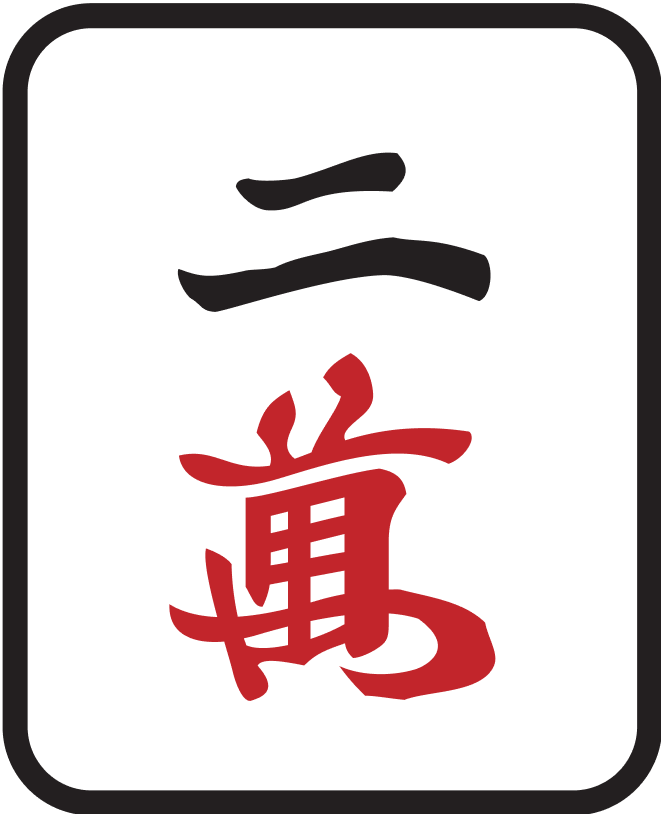
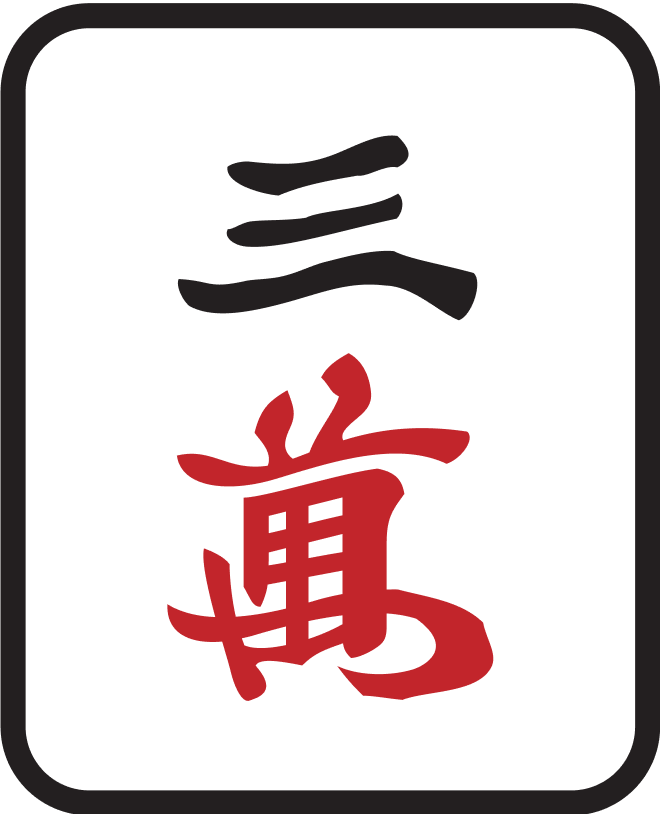 (Ii-Ryan-Sanman)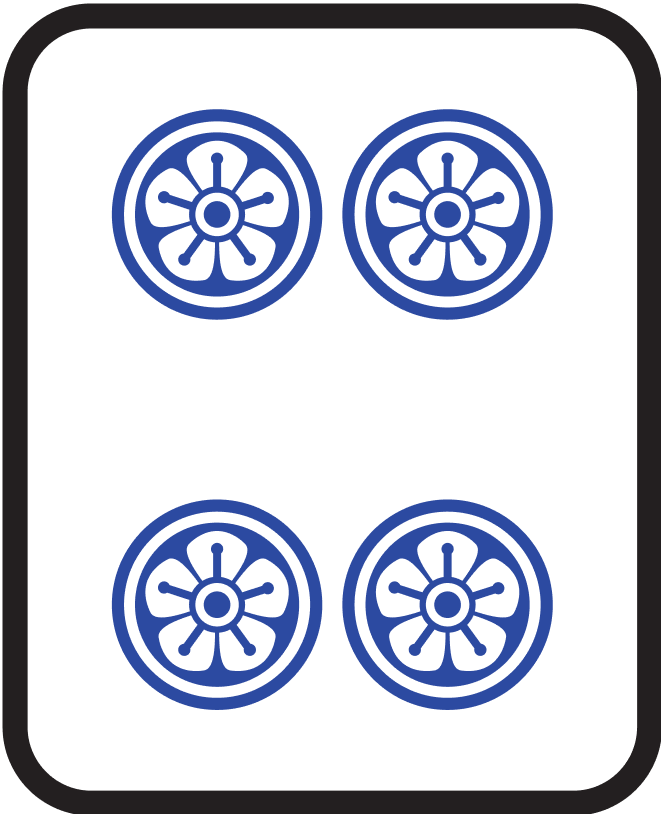

 (Suu-Uu-Roumin)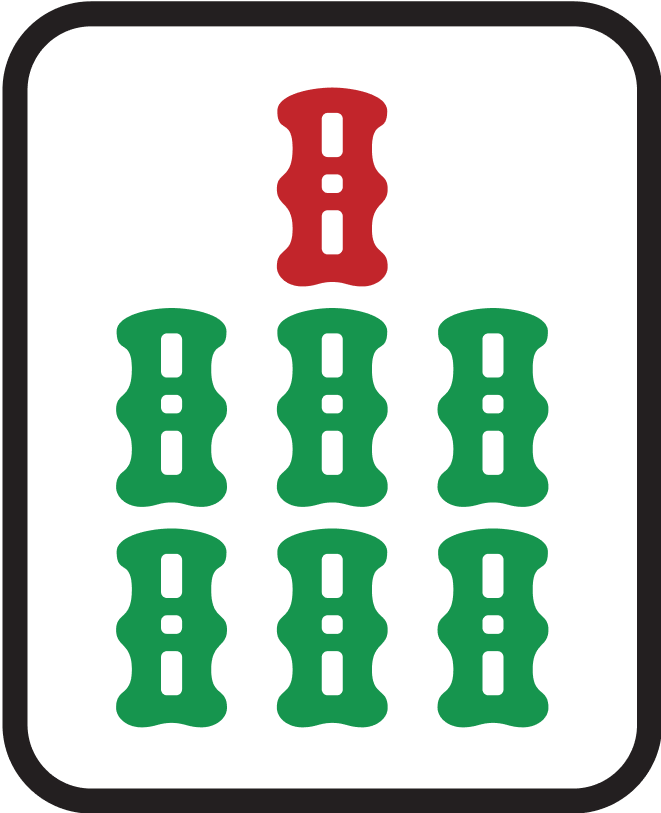
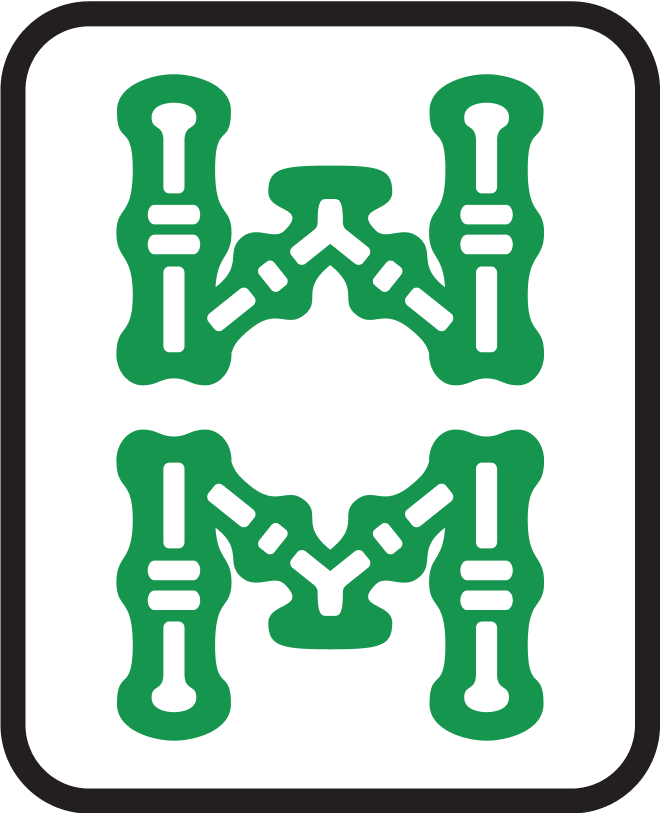
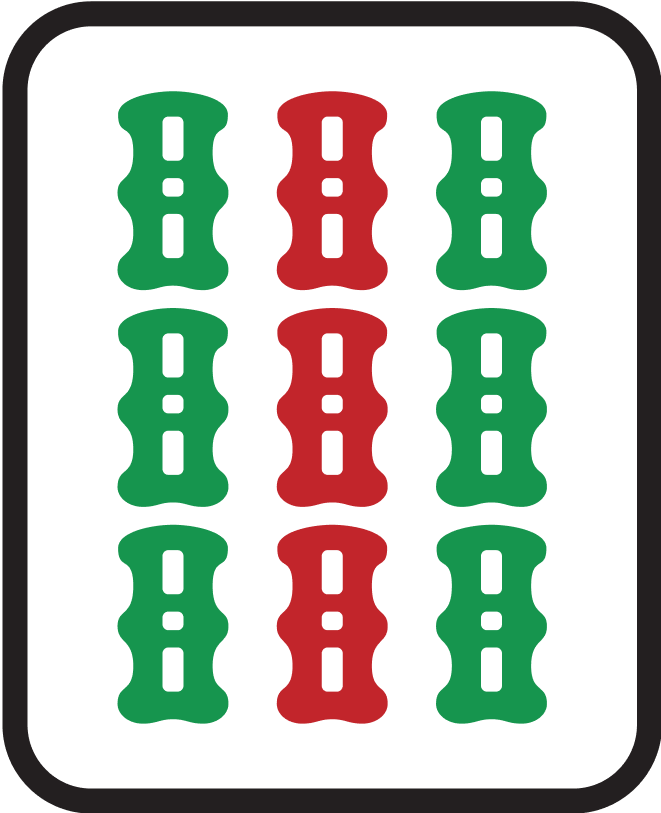 (Chii-Paa-Kyuusou)
Key Points:
- Must be the same suit (if Characters, all Characters; if Dots, all Dots)
- Numbers must be consecutive like “1,2,3” or “4,5,6”
- Cannot wrap around like “9,1,2”
- Cannot form sequences with honor tiles 用語の説明が見つかりません (East, South, West, North, White, Green, Red)
Common Mistakes:
- ❌
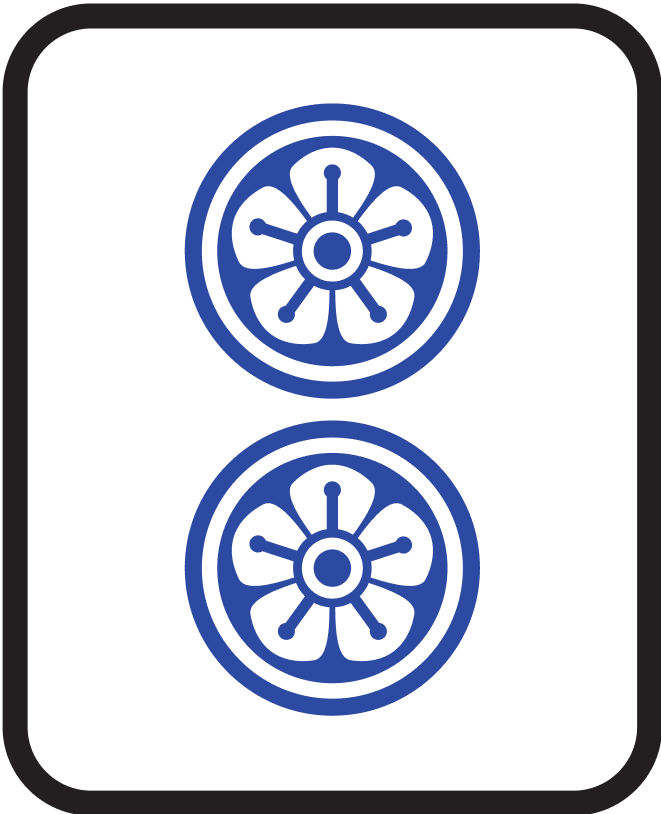
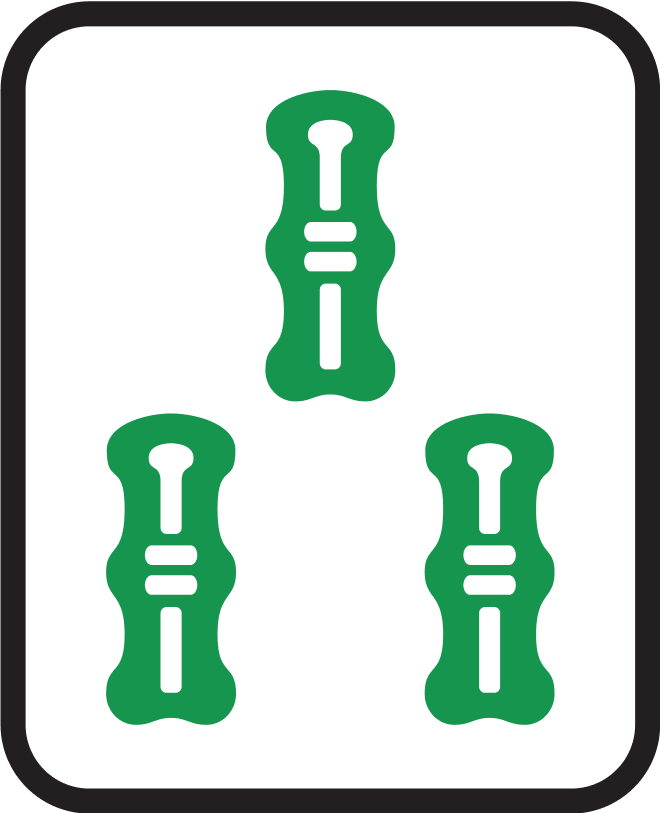 (different suits mixed)
 - ❌
 (numbers skip)
 - ❌
 (9→1→2 doesn’t connect)
2. Triplet (Koutsu) Three Identical Tiles
A triplet 用語の説明が見つかりません is three identical tiles.
For example:
- (Uuman triplet)
 (East triplet)
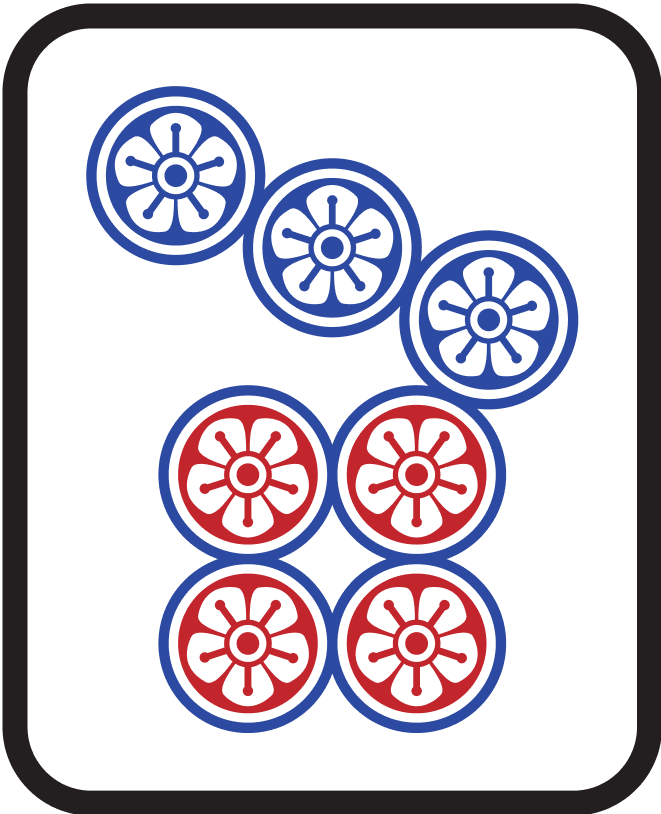 (Chiipin triplet)
Key Points:
- Any tile can form a triplet (both suit tiles and honor tiles are OK)
- Since there are only 4 of each tile, collecting 3 is quite challenging
- But it feels great when you complete one!
Pair (Jantou) Two Matching Tiles
A pair 用語の説明が見つかりません is two identical tiles. Also called “head” (atama).
For example:
 (Sanpin pair)
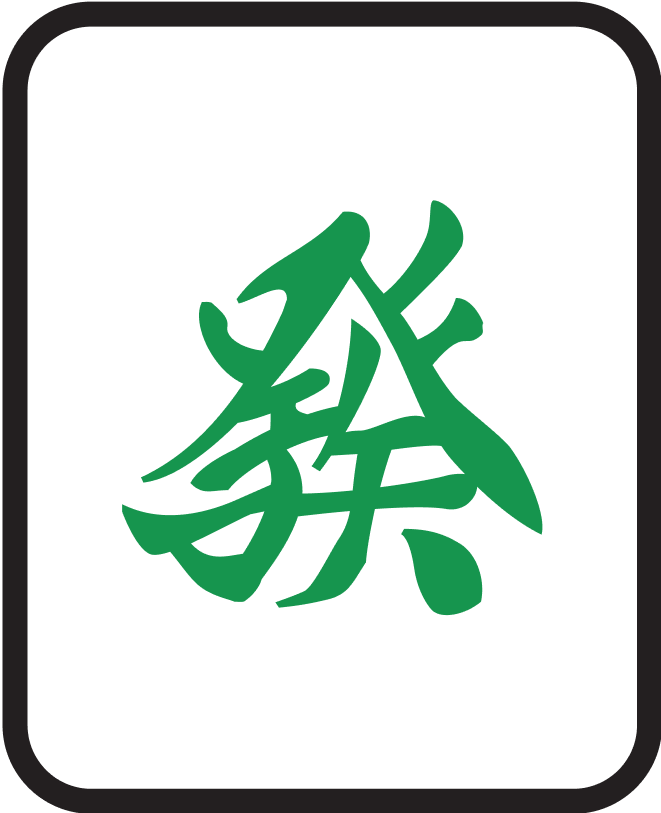 (Hatsu pair)
- (Paasou pair)
Key Points:
- Exactly one pair is required for a winning hand (having two pairs doesn’t work)
- Any tile can become a pair
- As the name “head” suggests, it’s like the “face” of your winning hand
Let’s Look at Actual Winning Hands!
Now let’s see what “4 sets and 1 pair” actually looks like:
Example 1: Hand Made Entirely of Sequences
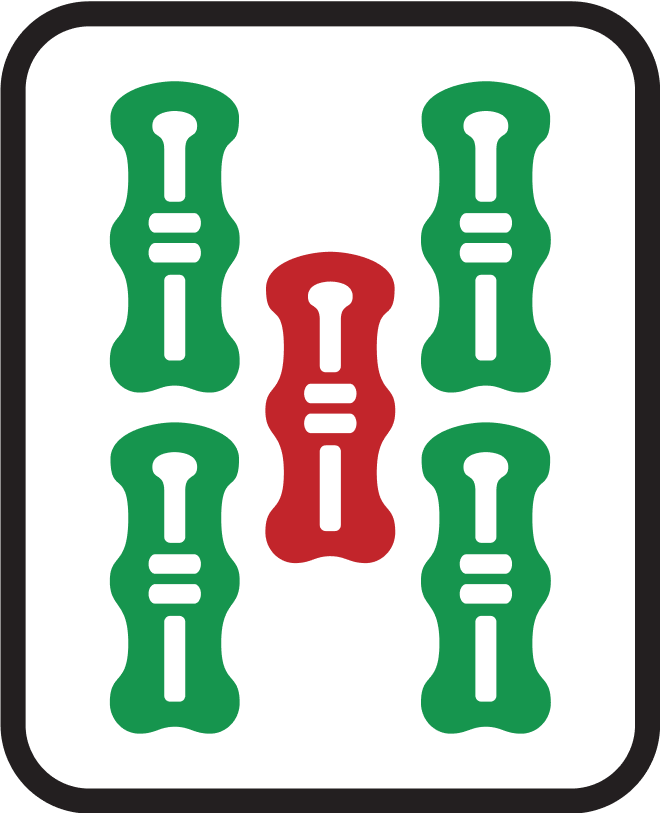
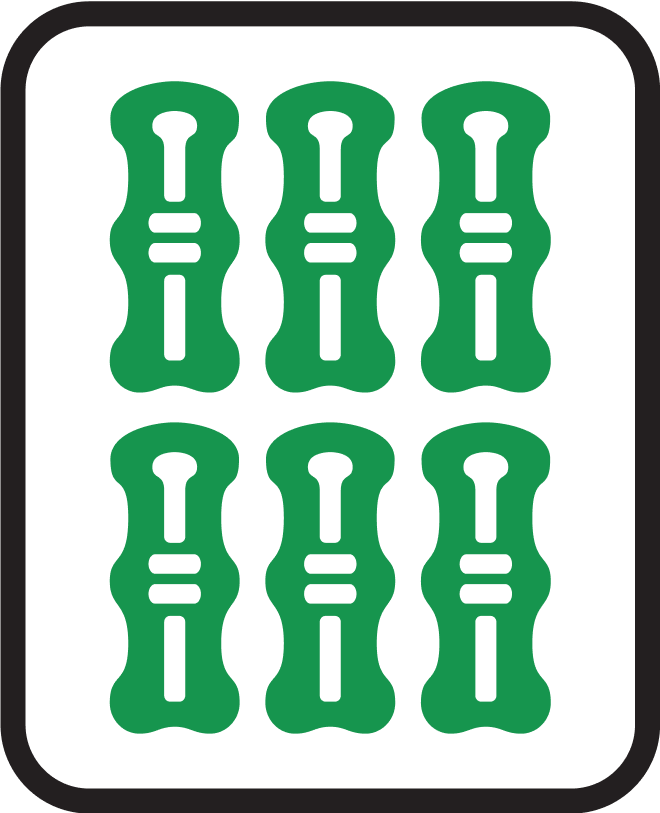


- 3 sequences: , ,
- 1 triplet: (South)
- Pair:
Example 2: Hand with Many Triplets

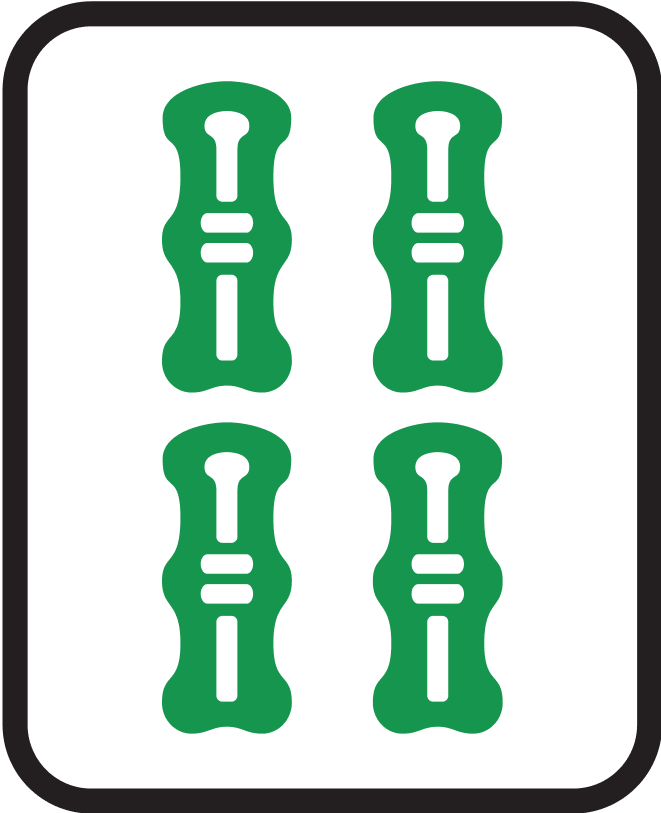

- 3 triplets: , ,
- 1 sequence:
- Pair: (White)
Example 3: Balanced Hand

- 2 sequences: ,
- 2 triplets: , (Green)
- Pair:
Tips for Finding “Just One More Tile!”
Practice Spotting Tenpai
“Tenpai” means you’re one tile away from winning. Look at the following hands and try to figure out what tile would complete them:
Practice Problem 1:
This has 3 sets and 1 pair completed, with one extra .
So, if you draw another , it becomes a pair and you win!
Practice Problem 2:

Look at ! If you draw or , the sequence completes and you win!
Common Questions and Pitfalls
Q: Do all sets need to be the same type?
A: No! The combination of sets is completely flexible.
- 4 sequences is OK
- 4 triplets is OK
- 2 sequences + 2 triplets is OK
What matters is the structure: “4 sets and 1 pair”.
Q: Can I win with only honor tiles?
A: Yes! For example:
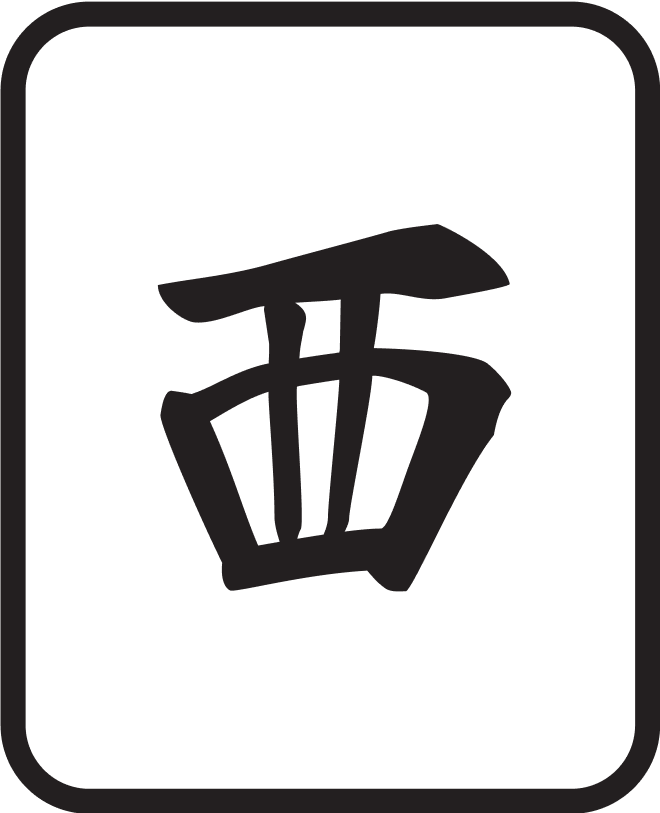
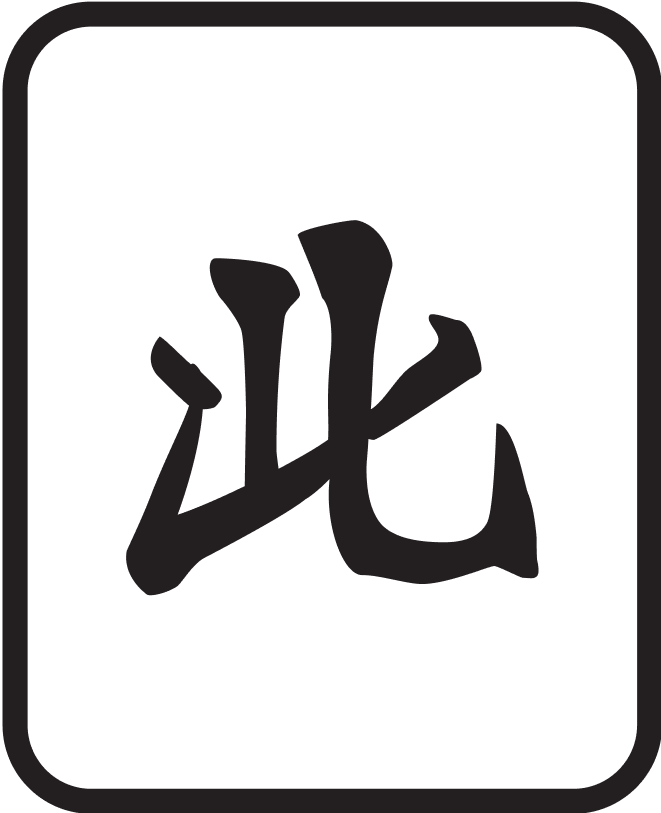
This is called “Tsuuiisou” (All Honors), a yakuman!
Q: But I only have 13 tiles?
A: Correct! Your hand has 13 tiles, but you add the 14th tile either by drawing (tsumo) or claiming a discarded tile (ron) to win.
Priority When Building Sets
In actual play, build your sets with these priorities:
-
Value Open-Ended Waits
- A shape like can become a sequence with either or
- Double the chances!
- A shape like
-
Utilize Pairs
- Two identical tiles like can become a triplet with one more
- Or can be used as your pair
- Two identical tiles like
-
Keep Isolated Tiles for Now
- A single tile with nothing around it should be kept for a while
- It might become useful in unexpected ways
Summary: Master the 4 Sets and 1 Pair!
Let’s review what we learned today:
✅ Sets are groups of 3 tiles (two types: sequences and triplets) ✅ Pair is two matching tiles ✅ 4 sets and 1 pair completes a winning hand ✅ The combination of sets is flexible
Once you grasp this basic concept, you’re well on your way to becoming a real mahjong player! At first, it’s perfectly fine to check each group one by one: “Are these 3 tiles a sequence?” “Oh, I made a triplet!”
As you get more comfortable, you’ll be able to glance at your hand and immediately know “I win with or !”
Now, let’s practice with some online mahjong!